The Post-Gig Reality: Why 2026 Belongs to Relationship Builders

OPINION | By Michael Cody
Why Direct Selling Is One of the Most Risk-Managed Income Paths in a Volatile World
By the end of 2025, something shifted.
Not in earnings dashboards.
Not in platform press releases.
But in conversations.
Field leaders across the world began hearing the same quiet refrain from prospects coming from everywhere. Gig work. Corporate roles. Freelancing. Real estate. Even traditional small business ownership.
“I’m working hard, but I’m not sure the path I’m on actually makes sense anymore.”
That question, does this path make sense, is the real signal of the moment we are in.
The gig economy did not collapse.
Corporate careers did not disappear.
Entrepreneurship did not stop being attractive.
But across every major income path, risk has become more visible, more front-loaded, and more unevenly rewarded.
That is where Direct Selling deserves to be re-evaluated. Not emotionally. Not defensively. But comparatively.

The Post-Gig Reality: what 2025 made impossible to ignore
According to multiple labour-market and platform-economy studies published over the past two years, the global gig economy now exceeds $600 billion in estimated value, and platform-mediated work continues to expand.
At the same time, the research converges on a consistent pattern.
Earnings are increasingly compressed once unpaid time, expenses, and incentive volatility are considered.
Algorithmic management governs pay rates, visibility, job access, and continued participation.
Income outcomes are highly skewed, with a small top tier performing well and the median worker absorbing instability.
Financial dependency correlates strongly with stress, burnout, and exit rates.
Even in higher-performing gig segments, the structural reality remains unchanged.
The platform owns the rules.
The worker carries the risk.
As a result, millions of people are quietly asking a better question. Not:
“How do I hustle harder?”
but:
“Which path actually manages risk intelligently?”
The real issue is not effort. It is path risk.
Most people do not struggle because they refuse to work hard.
They struggle because they choose paths where risk is poorly disclosed, feedback loops are painfully slow, upside is capped or delayed, or control mechanisms sit outside their influence.
Here is the reframing field leaders must now internalize:
Every income path has churn. What matters is how much risk you carry before you know whether the path fits you.
Viewed through that lens, and supported by real data, Direct Selling looks very different than its critics suggest.

A data-anchored look at the major income paths
To make a fair comparison, it helps to apply the same criteria across the routes people most commonly take: (1) capital at risk, (2) time to feedback, (3) dependency, and (4) exit optionality.
1. University to Corporate Career
Debt-financed, high non-completion and misalignment risk:
This route is still culturally framed as safe, but the outcomes are far more uneven than most people realize.
According to data from the National Student Clearinghouse and the National Center for Education Statistics, only about 61% of students complete a four-year degree within six years. A significant minority do not complete at all, yet many still carry student debt.
Federal Reserve data shows typical outstanding student loan balances in the $20,000 – $25,000 range, with total U.S. student loan balances around $1.6 trillion. Analysis from the New York Federal Reserve indicates that borrowers who do not complete a degree are significantly more likely to experience delinquency and long-term financial stress.
Workforce research consistently shows that a majority of graduates do not end up working in the field they studied, and many roles do not require the specific degree obtained.
Median job tenure continues to shorten, while layoffs increasingly occur independent of individual performance.

Translation for field leaders:
This path contains substantial churn, but it is socially reframed as changing majors, career pivots, or finding yourself, often after years of debt and delayed income feedback.
People do not fail out of this path. They discover, late and expensively, that it was not the right fit.
2. Traditional Small Business Ownership
High upside, high failure rates, concentrated capital risk:
Entrepreneurship is noble and values-aligned with Direct Selling. It emphasizes ownership, autonomy, and personal responsibility. But its risk profile is routinely underestimated.
According to data from the U.S. Bureau of Labor Statistics, only about 50 to 52 percent of new businesses survive to year five, and fewer than one-third survive to year ten.
Data cited by the U.S. Small Business Administration shows that even modest businesses often require tens to hundreds of thousands of dollars in startup capital once leases, equipment, inventory, licensing, and working capital are included.
Fixed costs do not pause when revenue dips. Rent, payroll, insurance, debt service, and compliance obligations persist regardless of performance.
Industry research consistently shows that the majority of small business owners do not sell their business. Most eventually close it, often recouping little of their invested capital.

Translation for field leaders:
Traditional business ownership concentrates financial, operational, and emotional risk upfront, long before the owner knows whether the model, market, or personal aptitude is a fit.
Failure here is not framed as churn. It is framed as loss, often after years of sunk cost.
By contrast, Direct Selling allows people to pursue entrepreneurship with dramatically lower startup capital, far less irreversible downside, and faster feedback on fit.
3. Real Estate and Asset-Heavy Platform Models
Leverage magnifies both upside and downside:
 Real estate remains a powerful long-term wealth strategy, but it is often misunderstood as a low-risk income alternative.
According to the National Association of Realtors, median down payments are approximately 9 percent for first-time buyers and 23 percent for repeat buyers, excluding carrying costs and maintenance.
Debt sensitivity, vacancy risk, regulation, and market cycles are unavoidable. Platform-layered models such as short-term rentals and vehicle sharing add algorithmic ranking, rule-change, and de-platforming risk.
Translation for field leaders:
These are operating businesses with capital exposure, not beginner-friendly income ramps.
4. Freelancing and Professional Platform Work
Large market, highly uneven outcomes:

According to the Upwork Research Institute, more than one-quarter of U.S. skilled knowledge workers freelance, generating roughly $1.5 trillion annually.
Earnings distribution is highly skewed. Visibility, ranking, and reputation systems heavily influence outcomes. Significant unpaid time is often required simply to remain discoverable.
Translation for field leaders:
Opportunity exists, but platform dependency creates fragility, especially when freelancing becomes primary income.
5. Gig and Platform Labor
Algorithmic control, income volatility, and regulatory response:
This is the heart of the Post-Gig reality.
 Independent analyses of ride-hail and delivery data suggest platform take rates can reach 30 to 40 percent or more of gross transaction value once fees and incentives are accounted for.
Multiple studies show cases where workers log more hours yet earn less year over year.
Algorithmic management controls pricing, access to work, performance evaluation, and deactivation, often with limited transparency or meaningful appeal.
De-platforming risk is immediate. Accounts can be suspended or terminated, instantly cutting off income.
The European Union’s Platform Work Directive, adopted in 2024, directly targets algorithmic management, transparency, and worker protections. This reflects a broader recognition that platform labor risk is systemic, not anecdotal.
Translation for field leaders:
Gig work offers flexibility, but it does so by shifting nearly all economic risk onto the worker while retaining centralized control at the platform level.
Participants are not building an asset. They are renting access.
Where Direct Selling actually sits structurally
Direct Selling has churn. So does every income path described above.
The difference is how the risk is structured and disclosed.
When practiced ethically and professionally, Direct Selling typically offers minimal upfront capital, fast feedback loops measured in months rather than years, skill-based progression rather than credential gating, portable relationships and reputation, optionality without catastrophic loss, and community and mentorship most paths lack entirely.
The risk is explicit, front-loaded, and adjustable.
That is not accidental. It is design.
People do not exit Direct Selling because the model is uniquely flawed. They exit because not everyone wants to build skills, relationships, and leadership.
That is not exploitation.
That is selection.
Passive Income vs Leveraged Income:
One of the most persistent criticisms leveled at Direct Selling is the idea that it promises “passive income,” a phrase critics are quick to dismiss as unrealistic or misleading.
They are not entirely wrong.
There is no meaningful income path in the modern economy that is truly “set and forget.”
- Not in Direct Selling.
- Not in real estate.
- Not in dividend investing.
- Not in business ownership.
- Not in digital platforms or automated portfolios.
The key here is understanding that in the modern Post-Gig era, the language really does matter, and the critics keep missing the most important point.
According to extensive economic and labor research, all durable income streams require some combination of upfront effort, ongoing stewardship, periodic reinvestment, and active risk management. Assets that appear passive from the outside almost always conceal meaningful work beneath the surface, whether that work is operational, managerial, legal, or relational.
The issue is not that Direct Selling fails to deliver passive income.
The issue is that passive income is the entirely wrong frame.
A more accurate and far more honest frame is leveraged income.
Leveraged income is created when effort is applied in a way that produces repeatable, compounding outputs rather than one-time transactions. Income continues not because no one is working, but because the work has been structured into systems, relationships, and distribution that persist beyond any single action.
A useful way to think about this is the difference between starting a cistern well and drawing from it.
In the early stages, significant effort is required to pressurize the system. Energy is applied, often with little visible return. But once the well is flowing, the output can far exceed the ongoing input required to maintain it. That said, if you stop pumping altogether, pressure dissipates and output declines.
The same dynamic applies to a flywheel. Early effort feels heavy and slow. Momentum builds gradually. Over time, small, consistent inputs are enough to keep the system moving, but abandoning it entirely causes momentum to decay.
Direct Selling works in much the same way.
Early effort is front-loaded. Relationship building, skill development, customer acquisition, and leadership formation take time. There is no shortcut around that reality. But once leverage is established through repeat customers and a growing, capable distribution network, the relationship between effort and outcome changes materially.
Maintenance still exists, just as it does in real estate portfolio management, index investing, or traditional business ownership. But the ratio between ongoing input and economic output can become highly favorable.
That is the point.
Critics often treat this dynamic as unique or suspicious, when in fact it is a defining feature of every scalable economic system. What differs across income paths is how much capital is required, how much downside risk is concentrated upfront, and how reversible the decision is if the path proves to be a poor fit.
Every asset class has its own method of creating leverage.
- Real estate uses financial leverage and appreciation, but carries debt, market, and regulatory risk.
- Traditional businesses use operational leverage, but require substantial capital and expose owners to fixed costs.
- Corporate careers rely on positional leverage, but remain subject to layoffs and organizational decisions outside individual control.
- Gig platforms offer time-based leverage, but retain centralized power over pricing, access, and continuation.
- Direct Selling creates leverage through people, relationships, and distribution.
When aligned with a reputable, ethical model, this approach offers a uniquely favorable risk-reward profile. Startup costs are comparatively low. Downside is limited and visible. Skills gained are transferable. Feedback arrives quickly. And upside is tied directly to leadership effectiveness rather than credentialing, capital access, or algorithmic favor.
 This is why, for many people, the “juice is worth the squeeze.”
The honest promise of Direct Selling is not effort-free income. It is earned leverage.
When done well, ongoing involvement can become modest relative to the value created, not because work disappears, but because work has been multiplied through systems and people.
That is not too good to be true.
It is simply how durable economic value is built.
Reframing churn honestly and correctly
Here is the line field leaders should be comfortable saying out loud.
“Every income path has churn.
“The real question is how much it costs you to find out whether you are a fit.”
In Direct Selling, financial downside is limited, skills gained are transferable, time to clarity is short, upside is uncapped, and exit does not destroy your balance sheet.
That is risk management, not wishful thinking.
Why this matters now and for 2026
The world is full of people willing to work.
What they are increasingly unwilling to do is carry years of debt before receiving feedback, sink capital into opaque systems, trust platforms that can change the rules overnight, or absorb risk without ownership.
Direct Selling does not promise certainty.
It offers something more realistic and more powerful.
A transparent, adjustable, relationship-driven path where effort compounds and risk is visible from day one.
That is not old-fashioned.
It is sophisticated.
The posture shift the field must make
This is the moment to stop defending the model in isolation.
The correct posture is comparison.
Not “Is Direct Selling perfect?”
But “Compared to what?”
When you zoom out, the narrative changes.

The moment we are in
I would submit to you, we are in a global era where risk is unavoidable.
The paths that win will be those that disclose risk honestly, minimize irreversible downside, and allow upside to scale with skill, service, and character.
Direct Selling, done well, meets that bar better than almost any income path available to the average person.
The time for this industry to stand tall is not behind us. It is now.
And 2026 belongs to the field leaders who understand that what we offer is not a shortcut, but one of the most risk-managed paths to ownership and relational equity in a volatile world.
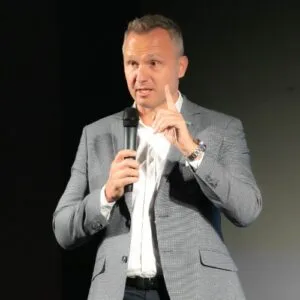
About Michael Cody
Michael is the Chief Operation Officer of Genistar, an 18-year-old direct selling company and the UK’s fastest-growing financial education and services brand, serving over 140,000 clients.
Michael Cody has spent more than 30 years leading and scaling organizations across direct sales, franchising, nutrition, CPG/FMCG, technology, professional and financial services. Michael specializes in transforming founder-led companies into scalable, professionally led enterprises and developing lead-worthy leaders who build companies that last.
Disclaimer: At BFH, we strive to keep all content—articles, press releases, data—as accurate and current as possible at time of publishing. However, treat this content as a guide, not as definitive authority for business decisions. Publishing a press release does not imply Business For Home BV endorses a company or individual, nor guarantees its claims. No warranties or representations, expressed or implied, are made regarding the accuracy, completeness, or suitability of information provided on this website. All content is provided “as-is,” without liability for errors or usage. Always fact-check and conduct your own due diligence. BFH publishes press releases for the global Direct Selling / Network Marketing / Home Business community. Laws governing Direct Selling can vary greatly by country; BFH does not warrant that any company or content is in full compliance with various local or country-specific laws; it’s up to the reader to research, verify and comply with all applicable local regulations.
Recommended Distributors
Suliko Schreckenbach

Caujuan Mayo

Ruth Mayne

Lorena May Peters

Randy Schroeder

Chyna Bethley

Sander de Bruijn

Tibor Fischer
MARIA CARVALHO

Roselin Rocha